
Some Winning Tips to Learn Golf in 3 Hours
Do you want to learn how to play golf but don't know where to start? In this article, I will give you some quick and easy tips on how to get started playing golf.
I'll walk through the basics of the game. You will also learn what equipment is needed, and what courses to consider in your area. Lastly, I'll introduce you to 3 strategies for learning how to play golf in 3 hours or less!
Tips to Learn Golf in Three Hours
-Find a course near you. There are 14,000 golf courses across the US. Find one within reasonable driving distance and make an appointment for your first lesson with a professional golfer or instructor.
-Book lessons ahead of time as they tend to book up quickly during optimal playing season (April through September). If that doesn't work out, call around to different local courses and see if any instructors have availability left on their schedules. The last resort is online learning programs such as GolfAdvisor's "Next Level" program which offers 12 modules over four weeks' worth of video instruction from famous pros like David Leadbetter and Mike Bender. They also offer telemetric tracking systems that measure your ability to play a course.
-The first lesson will be an overview of the equipment, technique and etiquette to get you started on your way to being able to play golf in three hours!
Expert Tip: Check out some Expert Golf YouTube channels for other helpful videos about golf techniques or gear reviews.
The most important thing you can do before buying clubs is find out what kind of golfer you are. This is very simple by visiting different local stores and hitting some balls with their various clubs available for testing so that they can give accurate advice on which ones best suit your needs. You should also take into account how experienced you are when deciding between beginner/intermediate or advanced sets as well since some may not right for what you need.
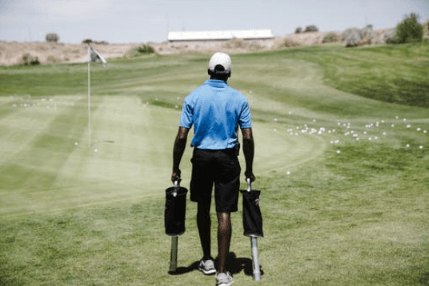
The next thing you should do is choose your golf ball based on how long of a hole you are playing and the course conditions that day. For instance, if it's windy or raining outside and I want to minimize my risk of losing balls while also hitting it as far as possible then I would go with a low compression ball like a Bridgestone E-11 Super Soft since they have less spin off the tee but more distance from their softer feel than other brands. If there isn't much wind at all out yet our course has very flat greens then I might opt for something higher in compression (like a Srixon Z Star XV) because these will stick to the ground longer before coming up so you can try to get putts closer to the hole.
Practice your grip so you can have a consistent swing each time and don't let your body start moving too early before hitting the ball. The best way to do that is by placing the club in front of you, then resting it on both palms with one hand near your right thumb and the other near left thumb with all four fingers holding down firmly (just like how we would hold someone's face). Keep elbows bent at about 90 degrees while sliding hands as far back towards our belt buckle as possible without bending over or lifting up off our knees if sitting down. This will prevent us from starting out reaching for golf balls too soon which could lead me into an uncoordinated position from the start.
Practice your stance so that you can get into a great position for hitting the ball. For starters, stand with both feet together and point toes forward to make sure we're in as good of balance as possible before beginning our swing. The left foot should be placed slightly ahead of right while making it parallel to each other (don't angle either one). This will help us clear away some of the rough or obstacles on the ground which could block our path. Now we want to turn back heel down towards golf hole while turning torso at least 45 degrees toward target area (note: this is an exaggerated example, but still important to take note). Keep the chin up so that eyes are looking straight ahead instead and star step back to get into position.
We want our grip (hold) on the club so that it's below and in contact with left hand but above right. The lower we hold, the higher up will be our swing which is what beginners should do at first for better control of ball flight. It may take some time getting used to this placement if you're not used to it already due to muscle memory from other sports like baseball or tennis where they are held higher than ours.
Before starting the swing, make sure hands have been turned correctly toward the target area and keep thumbs pointing down towards the ground as well since this helps us maintain a good grip on the club while swinging through the impact zone. At completion of last step before taking off, start to press down club head on the grip and release as we go through impact zone.
The way to keep your feet planted well is with an anchor point where you press them into ground, either heel or toes. This pressure will help us stay grounded while swinging for better accuracy of strikes from tee-box to green because it's hard to be accurate when our weight has shifted too much in one direction before taking off. It also allows flexibility if we need to adjust stance at any time during swing without being restricted by tightness in muscles.
A good tip I've heard about keeping a good posture throughout the swing is maintaining muscle tension so that the spine stays straight rather than bending over towards ball (which would result in shanks). This won't happen right away, but with practice will become natural.
Hopefully, these quick tips give an idea of what not only I learned after three hours of learning golf and was able to do in just a few hours. The general idea is you can get started quickly as well. You won't be a pro in 3 hours but you can definitely get started.