
Archery is an ancient sport that has been around for centuries. It?s a bit of a niche, but it still has plenty of people who practice the art and love to share their knowledge with others. There are many different types of archery, from Olympic-style shooting to traditional bowhunting. All have their own unique appeal and skill set required to master them well enough to be competitive in tournaments or just out at home with friends or family. This article will focus on Olympic-style shooting as it can be practiced by anyone looking for a fun way to get active outside!
What is archery?
Archery is an ancient art. It's about accuracy and precision, finding the target no matter what obstacles are in your way, oftentimes shooting around those very same obstructions to hit something you can't see but know it is there.
A weapon for hunting wild game or practice? An Olympic event on a dusty field with the whole world watching? A hobbyist activity at home under one?s own roof where time moves without deadlines and success does not need validation from outside observers to be satisfying or meaningful; archery has been all of these things over its long history as well as many other forms that we today might not even recognize because they have evolved so much beyond their original form yet still maintain some connection through purposeful design choices.
History of archery
The origins of archery can be traced back to the ancient Egyptians, who used rudimentary bows and arrows. These early weapons were deadly up close but ineffective at a distance.
Archery is believed by many historians to have originated in Egypt as hunter-gatherers sought an efficient way for taking down prey from afar while still maintaining some degree of stealthiness when stalking their quarry. The earliest forms involved using primitive wooden bows with loose sinew strings that had minimal range--making it difficult if not impossible to take down animals without getting too close within visual range (which would put you dangerously near your target). As time went on, more people began hunting game for food instead of relying only upon agriculture or fishing because these practices became less reliable due primarily to changes in climate and weather. This increased the need for archery skills, which led to innovations like bowstrings made from animal intestines that tightened when they were drawn (thanks to an invention known as a "bodkin" or fish hook).
Archery equipment
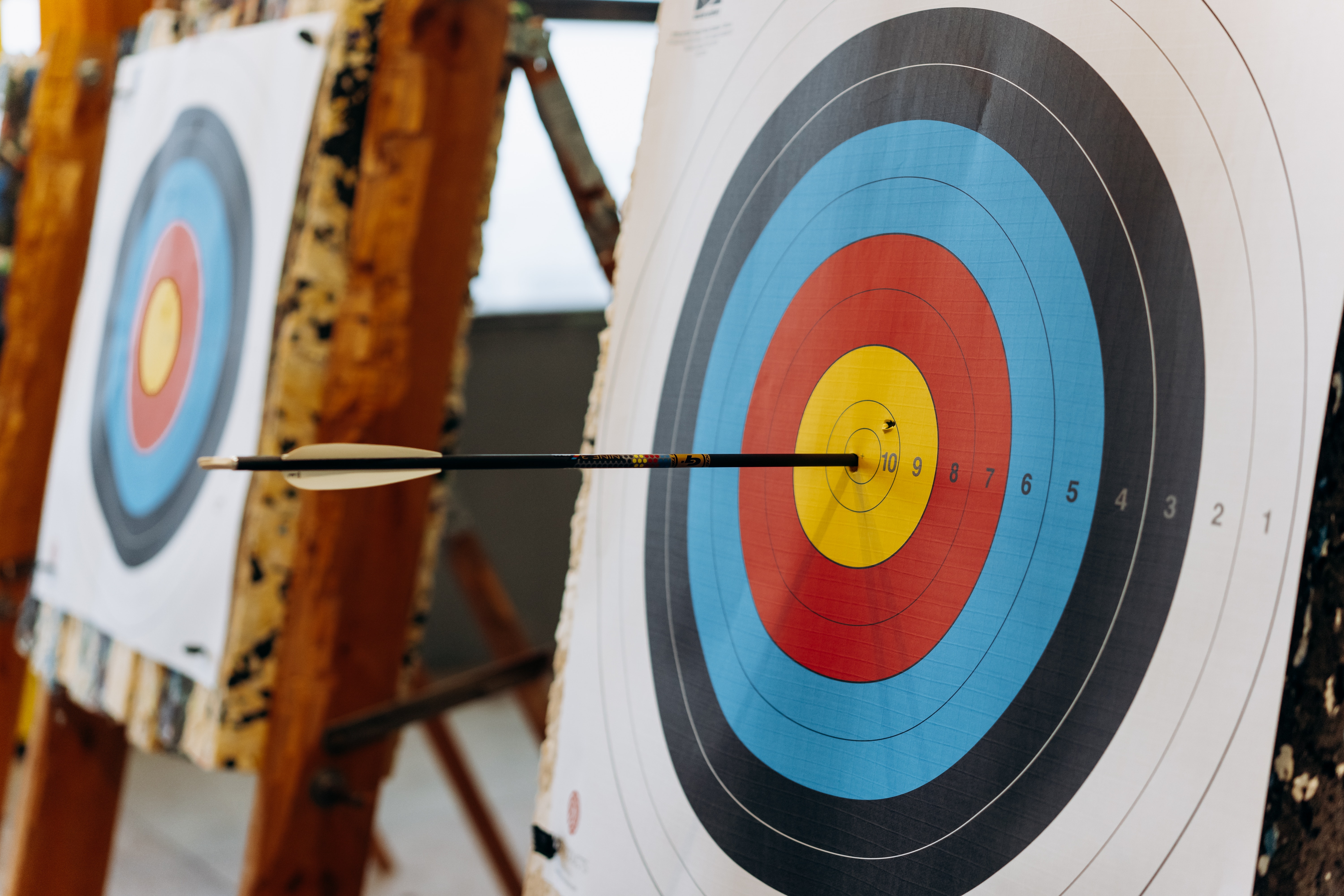
Archery is a sport that requires mastery of many different equipment types to become proficient. There are three major categories: bows, arrow shafts, and arrows tips. The bow's most important attribute is the draw weight which measures how hard you need to pull it back in order for the string to release an arrow - especially when shooting at long distances or with heavy targets such as deer or elk. Arrows come short lengths called "fletchings" (feathers) on each side near their head-end providing stability while flying through the air by increasing surface area; they also have bulb-shaped ends known as "nocks". Arrowheads can be either blunt points made from metal like aluminum alloy designed not to injure those hit but still penetrate the surface, or they can be sharp points designed to injure the target.
Safety guidelines for archers and spectators
Archery is a popular sport and can be done recreationally or competitively. The safety guidelines for archers are very important to follow so that the participants, spectators, and objects around them stay safe from harm. Archery arrows should not exceed 300 feet per second as this could cause damage on impact with an object such as wood boards; they're also fitted with feathers at their end instead of metal tips in order to avoid any unintended injuries when hitting other people. Spectators need to wear protective eye gear while watching close-up shots since there have been cases where arrowheads had gone astray during competition rounds due to faulty equipment by competitors who were shooting too closely together - these projectiles can go up towards 350 miles per hour!